
Assyrtiko beyond Santorini: 66 Wines from across Greece
A major blind tasting reveals nine regional profiles and the growing diversity of Greece’s most important white grape.
by Evmorfia Kostaki DipWSET, Originally published in Greek Wine Explained 2026
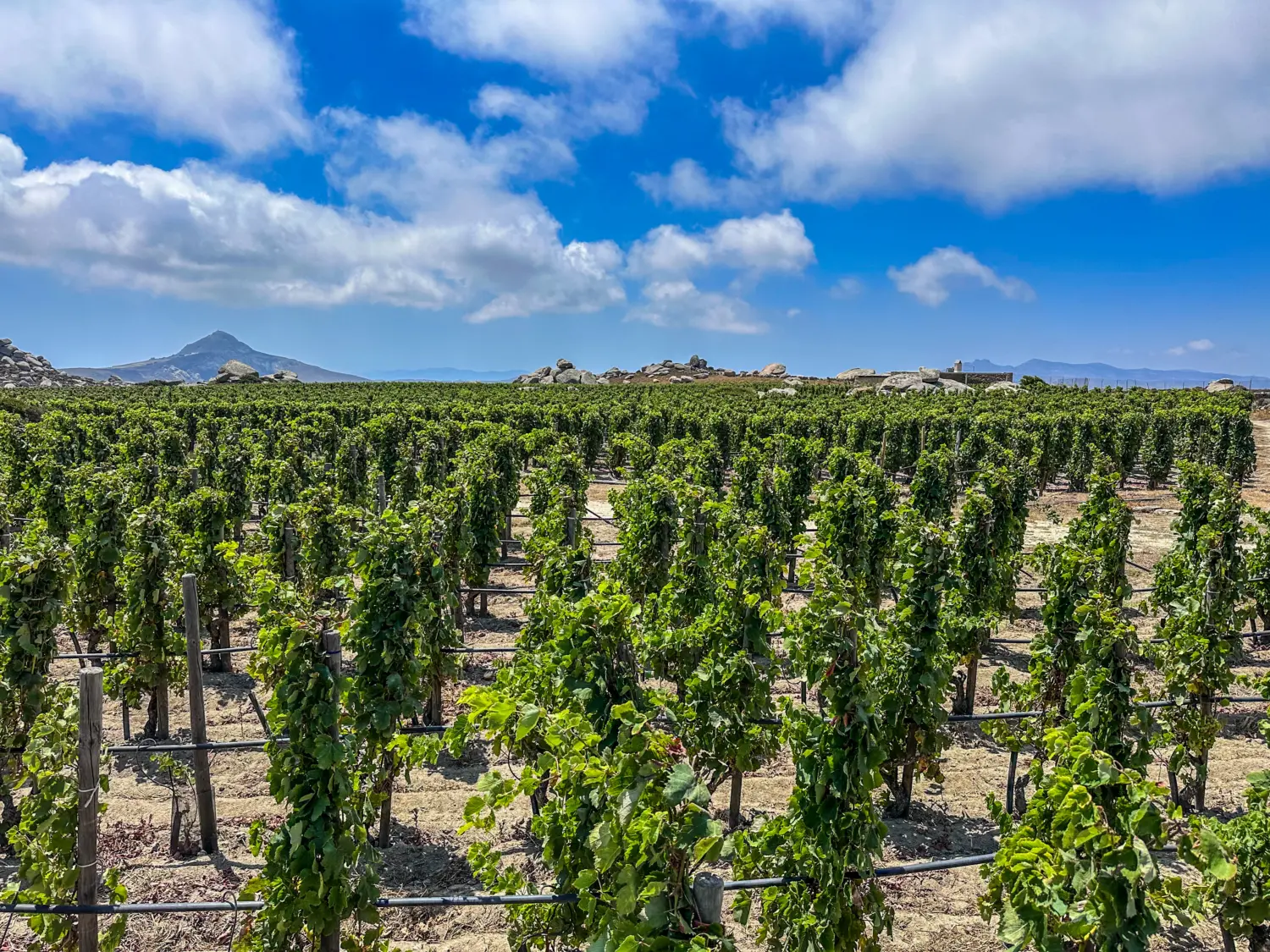
Assyrtiko is the first white grape variety to spread across Greece. It has been grown on most Greek islands and in all major mainland viticultural areas. This offers a valuable opportunity to understand how each region's terroir influences its expression. In 2020, Assyrtiko was the eighth most-planted grape in Greek vineyards, with a 13% increase in planted area compared to 2015 and a more significant 20% rise since 2010.
Assyrtiko is a resilient grape that is largely resistant to grape diseases, making it an easy choice for vineyard cultivation. It is a late-ripening variety, with harvest times varying by region. In the hot and dry Cyclades, harvest takes place around 15 August, while it can extend until mid-October in high-altitude vineyards on the mainland.
It is also easy to handle in the cellar because it is less susceptible to oxidation than most indigenous Greek varieties. It naturally has a low aromatic intensity and provides a clean canvas for winemakers to express their creativity and employ different techniques (ranging from varying levels of cold maceration and skin contact to barrel fermentation, maturation, and lees ageing) to craft their desired styles.
This makes Assyrtiko an overall economically and environmentally sustainable choice for wineries. As if that’s not enough, its adaptability to hot, dry climates, its ability to regulate alcohol levels, maintain high acidity, and preserve crisp fruit flavours, makes it an ideal variety to support in the face of climate change.
With the increasing popularity of Assyrtiko, Greece is positioning itself for success in the coming years, while many wine regions worldwide struggle to adapt to rapid change. The numerous terroirs where Assyrtiko is now cultivated, along with the wide variety of winemaking techniques, mean you can find a broad spectrum of styles suitable for different occasions. We hope this report highlights lesser-known aspects of Greek Assyrtiko beyond Santorini and inspires you to explore it.
For more details on Assyrtiko, see the comprehensive section in the Greek Wine Explained 2024 report and Wojciech Bońkowski MW's recently published Santorini Report. Both are included with your karakasis.mw Premium Afficionado membership, but they can also be purchased separately.
Terroir influence in Assyrtiko
During this tasting, winemaking techniques were set aside, and tasting notes were made without considering the region of origin. To our surprise, distinct regional patterns emerged, allowing us to develop nine regional profiles. While these are not scientific discoveries, they represent an initial step in exploring how Greece's highly variable terroir can influence wine.
Overall, Assyrtiko is a hardy, thick-skinned variety, where cold maceration and varying levels of skin contact are common among producers. This often results in wines with a concentrated palate and a phenolic grip on the finish. Acidity is high, which is much needed to balance the rich palate. Assyrtiko is a fairly neutral grape, mainly showing orchard and citrus fruit flavours. However, this subtlety allows regional characteristics to emerge.
In cooler climates with greater water availability, Assyrtiko generally shows a pure, fruit-forward character. As temperatures increase, an increasingly herbal profile develops, with thyme often mentioned as a common descriptor. High salinity is typical in many Assyrtiko wines, but it is more prominent in those from island or coastal regions.
Assyrtiko reacts to sunlight by producing TDN (1,1,6-trimethyl-1,2-dihydronaphthalene), the compound responsible for aromas reminiscent of petrol, kerosene, rubber, and garden hoses. Areas with more intense sunlight and vines trained using Vertical Shoot Positioning (VSP) tend to have higher levels of these aromas. Conversely, bush-trained vines act like an umbrella, shielding the grapes from direct sunlight and thus reducing TDN levels. In this tasting, there appears to be no connection between skin contact levels and TDN. Some wines pressed directly display these aromas, while others with skin contact are free from them.
Organising the tasting
Sixty-six wines made solely from Assyrtiko grapes were collected from various regions across Greece. Producers submitted one bottle each from their current vintages, and there was no charge to take part in the tasting. The wines were organised into six categories based on winemaking style. Each group was tasted on a different day, with the wines served blind. This approach included wines from different regions and vintages, minimising bias towards the “typicity” of specific areas and enabling a more accurate assessment of each wine.
After the tasting, the wines were unveiled and paired with their tasting notes. At the end of the session, the wines were organised by region. Subsequently, a regional pattern emerged, highlighting their typical character. Eighteen wines demonstrated particularly high quality during the blind tasting and were re-tasted blindly to be awarded 2 or 3 cats. The wineries are listed alphabetically within each region. Wines were tasted and reviewed by Evmorfia Kostaki.
Bottle grams refer to the weight of a full bottle.
Subscribe to Continue Reading
This premium blog post is restricted. Subscribe to get access to all blog posts and unlock our complete library of Greek wines, varieties, and expert insights.
- Email updates (1–2 / month)
- Access to free posts
- Special subscription offers
Aficionado
For enthusiasts and trade professionals who want full article access
Subscribe Now- Full access to all subscriber-only posts
- Full access to wine reviews and grape varieties sections
- Executive summaries for major features/reports
- Reliable, focused information on Greek wine, in an international voice
Aficionado Premium
For advanced readers, sommeliers & buyers needing deep documentation
Go Premium- Everything in Aficionado, plus:
- Full access to all Reports (9 to date)
- Access to approximately two new reports per year
- Executive summaries for major features/reports
- Reliable, focused information on Greek wine, in an international voice
Professional
For importers, retailers, restaurants, producers, and trade press
Get Professional- Everything in Aficionado Premium, plus:
- Publication rights for reviews and short tasting notes (up to 50 words)
- Article excerpt rights (up to 120 words, up to 3 excerpts/month)
- Priority support (email) for usage/attribution questions
- Mandatory attribution required with active link where possible
Already have an account?
Sign in here