
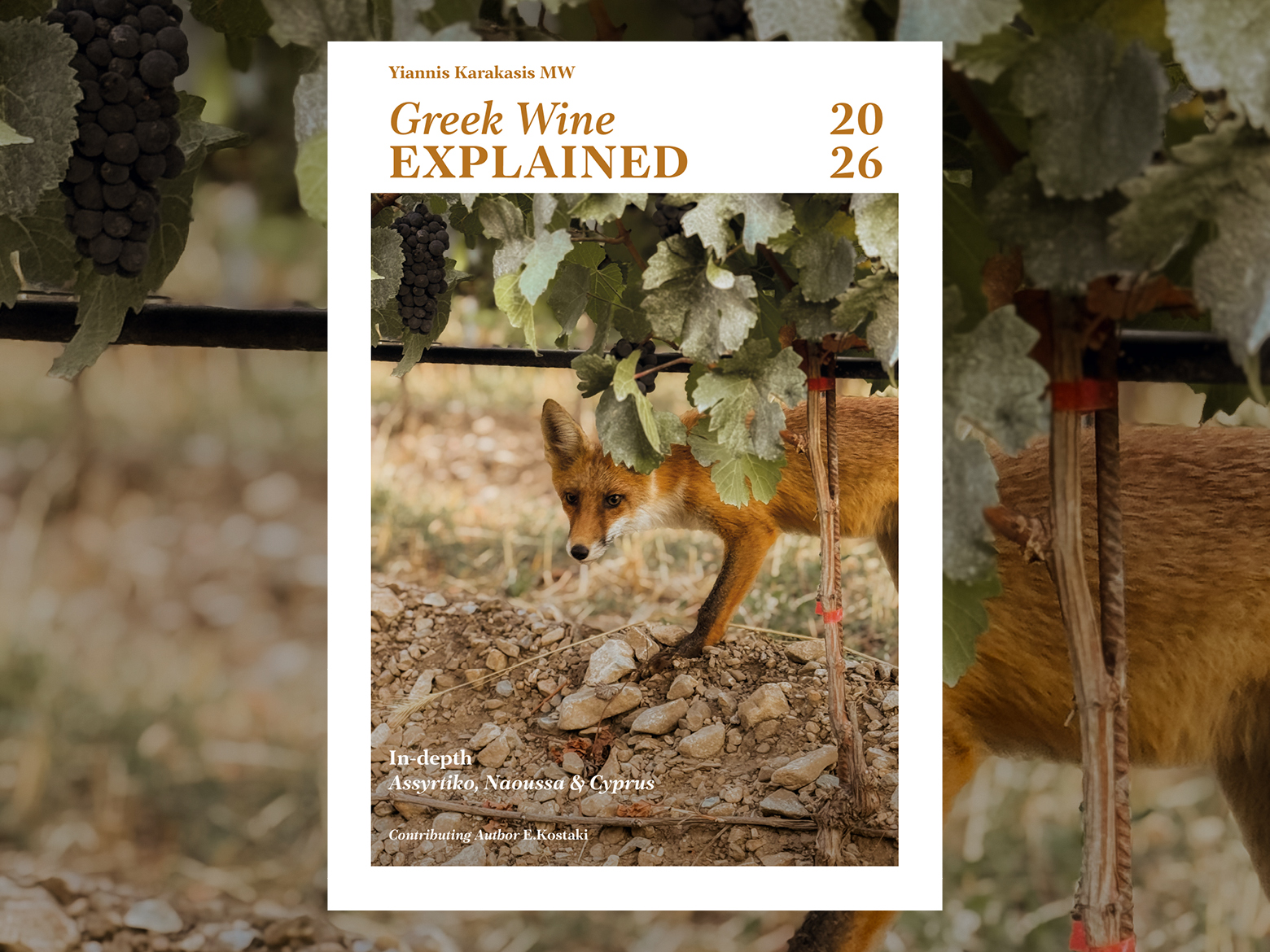
Greek Wine Explained 2026: Notes from the inside
By Yiannis Karakasis MW
I spend most of my year tasting Greek wine in a very specific way. Not to decide whether a bottle is simply good, but to understand why it tastes the way it tastes and whether that result can be repeated.
That distinction matters in 2026. Greek wine has earned visibility and respect in fine restaurants, specialised tastings, and increasingly in the cellars of collectors who barely knew how to pronounce Assyrtiko a decade ago. At the same time, the industry is operating under real pressure. Yields are shrinking, costs continue to rise, and the domestic market remains fragile. If we want a future that is more than a promising story, we need Greek wine to feel more real and less dependent on fantasy.
This is the starting point of Greek Wine Explained 2026, my third edition, expanded to 152 pages, the longest so far, created with the valuable contribution of Evmorfia Kostaki DipWSET. The report begins with facts because facts keep us honest. In the 2023 to 2024 season, Greek wine production fell to about 1.4 million hectolitres, a historic drop of over 30% compared to the previous year. Exports in 2023 reached roughly ninety-nine to one hundred million euros in value, rising despite lower volumes, suggesting that the average price per litre continues to grow. In Greece, per capita consumption is around 10 litres per year, of which about half is estimated to be bulk wine without standard packaging. This is one of our central paradoxes.
The global context adds urgency, but it also offers perspective. In 2024, global wine production fell to around 226 million hectolitres, the lowest in over 60 years, while regular wine consumption is structurally declining and shifting towards more occasional, more selective drinking. People who drink less expect more and scrutinise prices more carefully. Greece is not alone in this reality, but we must respond to it with discipline.
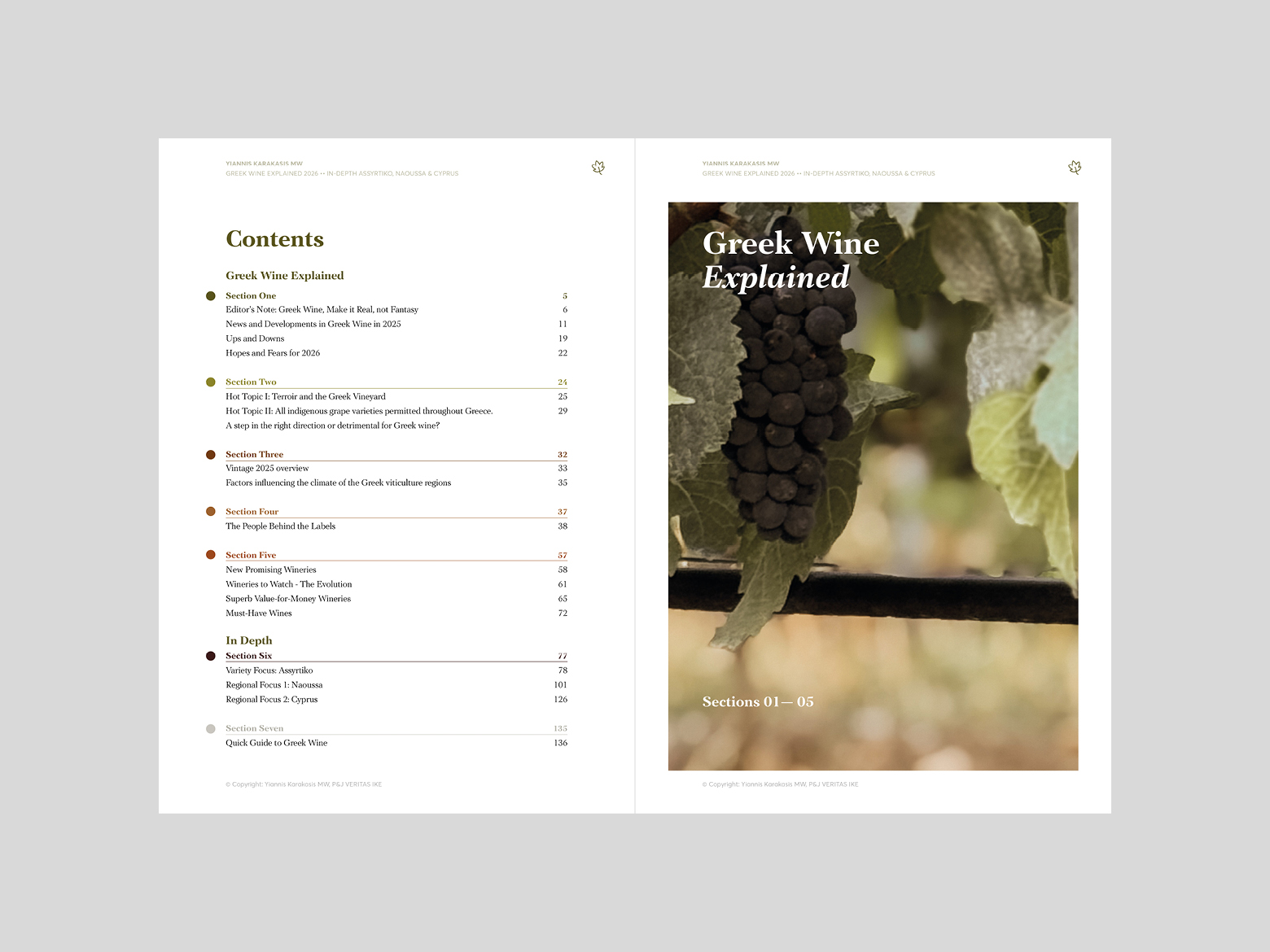
So, what does Greek Wine Explained 2026 do differently?
Subscribe for FREE to continue reading this article.
This premium blog post is restricted. Subscribe to get access to all blog posts and unlock our complete library of Greek wines, varieties, and expert insights.
- Email updates (1–2 / month)
- Access to free posts
- Special subscription offers
Aficionado
For enthusiasts and trade professionals who want full article access
Subscribe Now- Full access to all subscriber-only posts
- Full access to wine reviews and grape varieties sections
- Executive summaries for major features/reports
- Reliable, focused information on Greek wine, in an international voice
Aficionado Premium
For advanced readers, sommeliers & buyers needing deep documentation
Go Premium- Everything in Aficionado, plus:
- Full access to all Reports (9 to date)
- Access to approximately two new reports per year
- Executive summaries for major features/reports
- Reliable, focused information on Greek wine, in an international voice
Professional
For importers, retailers, restaurants, producers, and trade press
Get Professional- Everything in Aficionado Premium, plus:
- Publication rights for reviews and short tasting notes (up to 50 words)
- Article excerpt rights (up to 120 words, up to 3 excerpts/month)
- Priority support (email) for usage/attribution questions
- Mandatory attribution required with active link where possible
Already have an account?
Sign in here