Naoussa Now: How Xinomavro Is Evolving, in 5 Wines
by Yiannis Karakasis MW
Naoussa earned its reputation through reds that needed time. The classic model was clear: firm tannins, high acidity, and lots of patience. But the market has shifted. Buyers and drinkers still want structure and identity, yet they increasingly ask for purity, precision, and an earlier drinking window. Naoussa has responded. Not by abandoning what makes it unique, but by refining it.
The real shift is tannin management
Classically, Naoussa aimed to moderate tannins through careful extraction, then rely on time and oxygen to soften the structure. The result is obvious with new oak ageing, especially in barriques. With extended ageing and oxygen exposure, the wines often drift toward oxidative tones while the clarity of red fruit fades.
Over the last decade, a different approach has spread across the region. Producers increasingly incorporate whole clusters, often skip cold soak, and move away from new small barrels in favour of larger or older formats that frame the wine without imprinting it. The goal is not to make Naoussa less ambitious, but rather to make it more precise in texture. Whole clusters and longer extraction can help build phenolic chains that later polymerise and precipitate, creating a softer tannin perception on the palate. The result is a clearer fruit profile and, in many cases, a wine that tastes more complete at a younger age.
This is precisely where Naoussa regains its commercial appeal. While it continues to be a region suitable for cellaring, it is increasingly becoming a place for listings too.
A useful comparison: Xinomavro and Nebbiolo
In a Xinomavro versus Barolo and Barbaresco masterclass linked to Great Greek Wines, co-presented with Wojciech Bońkowski MW, we highlighted the clear similarities: pale colour, strong tannic structure, fresh acidity, a strong sense of place, and genuine ageing potential. We also pointed out a key difference in direction. Xinomavro is currently evolving towards lighter styles, often with less oak and a more subtle approach. Meanwhile, Barolo and Barbaresco still generally rely on lengthy wood ageing.
For the trade, this matters because it clarifies what Naoussa can be in a portfolio. It can deliver seriousness and identity, while also offering stylistic diversity and more flexibility on the list.
2021 versus 2022: two years, different outcomes
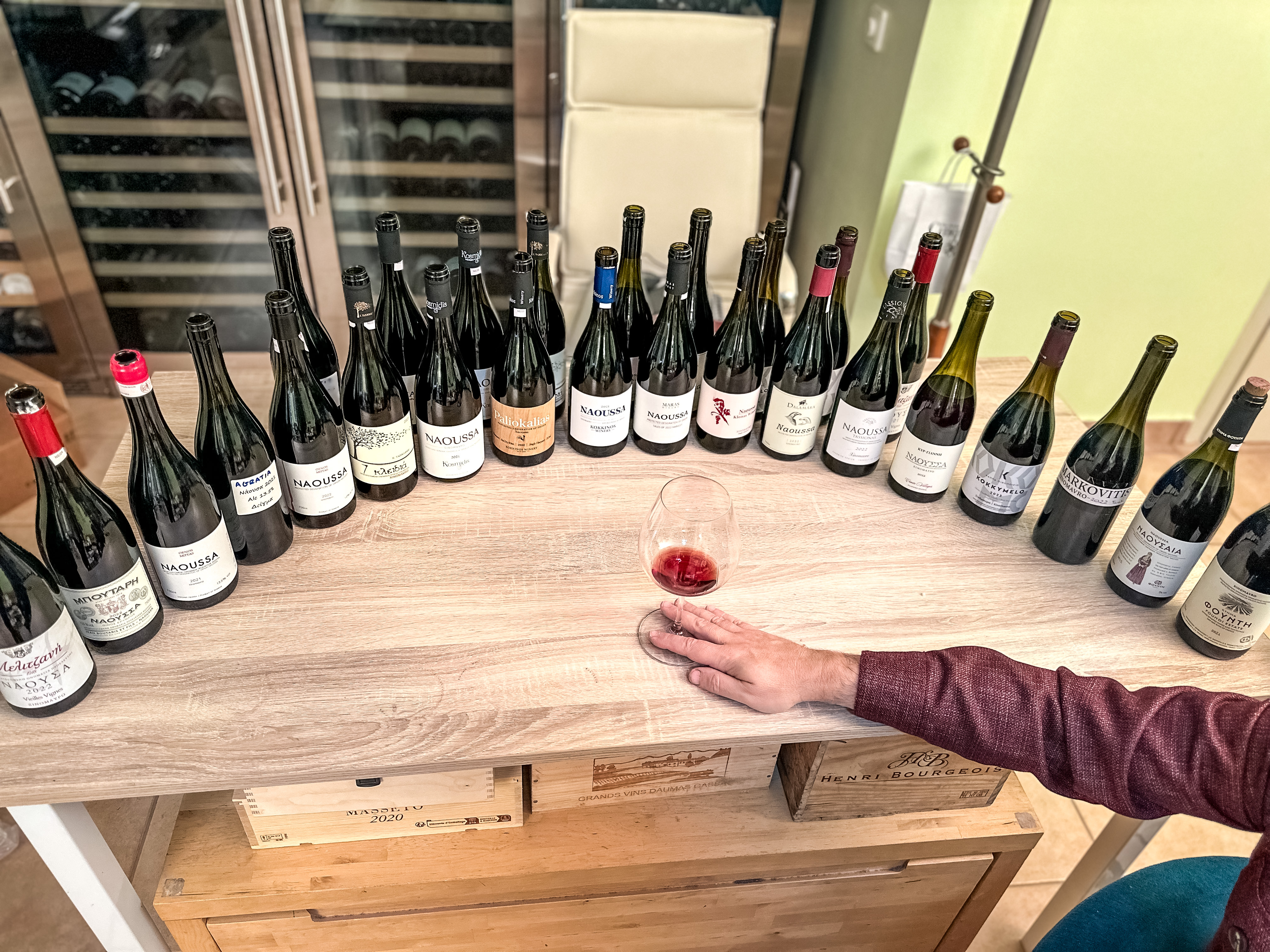
The Naoussa tasting in Greek Wine Explained 2026 compares 2021 and 2022 side by side, and the contrast is revealing. 2021 and 2022 are two challenging vintages for different reasons. The former experienced a very dry winter and spring, and a very warm summer with heatwaves. Producers who waited to harvest under cooler conditions produced higher-quality grapes. For example, Markovitis was harvested on Oct 4. The 2022 vintage had a cool, humid winter with abundant rainfall in June. Summer was milder, resulting in balanced and healthy grapes. Overall, 2022 appears riper and more layered; however, some producers adapted better in 2021. If you are purchasing for a list, 2022 often provides you with immediate clarity and confidence. If you seek tension and depth, 2021 can be rewarding with careful producer selection.
Five Naoussa wines that explain the new chapter
The five wines listed below are not a definitive ranking. They are selected because each one clearly communicates a specific stylistic point that a buyer, sommelier, or engaged drinker can understand immediately.
Subscribe for FREE to continue reading this article.
This premium blog post is restricted. Subscribe to get access to all blog posts and unlock our complete library of Greek wines, varieties, and expert insights.
- Email updates (1–2 / month)
- Access to free posts
- Special subscription offers
Aficionado
For enthusiasts and trade professionals who want full article access
Subscribe Now- Full access to all subscriber-only posts
- Full access to wine reviews and grape varieties sections
- Executive summaries for major features/reports
- Reliable, focused information on Greek wine, in an international voice
Aficionado Premium
For advanced readers, sommeliers & buyers needing deep documentation
Go Premium- Everything in Aficionado, plus:
- Full access to all Reports (9 to date)
- Access to approximately two new reports per year
- Executive summaries for major features/reports
- Reliable, focused information on Greek wine, in an international voice
Professional
For importers, retailers, restaurants, producers, and trade press
Get Professional- Everything in Aficionado Premium, plus:
- Publication rights for reviews and short tasting notes (up to 50 words)
- Article excerpt rights (up to 120 words, up to 3 excerpts/month)
- Priority support (email) for usage/attribution questions
- Mandatory attribution required with active link where possible
Already have an account?
Sign in here